What’s the difference between open and enclosed transport?
Difference Between Open v/s Enclosed Transport?
When you’re shipping a vehicle, one of the most important decisions you’ll need to make is whether to choose open auto transport or enclosed auto transport. Both options are safe and widely used across the industry, but each comes with its own advantages depending on your needs, budget, and the type of vehicle you’re shipping.
In this guide, we’ll break down the key differences between open and enclosed car transport in simple terms, so you can make the right choice for your vehicle.
Definition of Open auto transport
Open auto transport is the most common and cost-effective way to ship a vehicle. In this method, your vehicle is loaded onto an open-air trailer, typically with several other cars. These trailers are the same ones you often see on highways carrying new cars to dealerships.
Benefits of open vehicle transport
- More affordable – Usually 30% to 50% cheaper than enclosed options.
- Faster availability – Easier to schedule due to higher demand and more carriers.
- Safe and reliable – Cars are securely strapped and handled by experienced transporters.
Things to consider
- Exposure to weather and debris – Your car will be out in the open air, just like if you were driving it.
- Not ideal for rare or delicate vehicles – Basic protection may not be enough for high-end or vintage models.
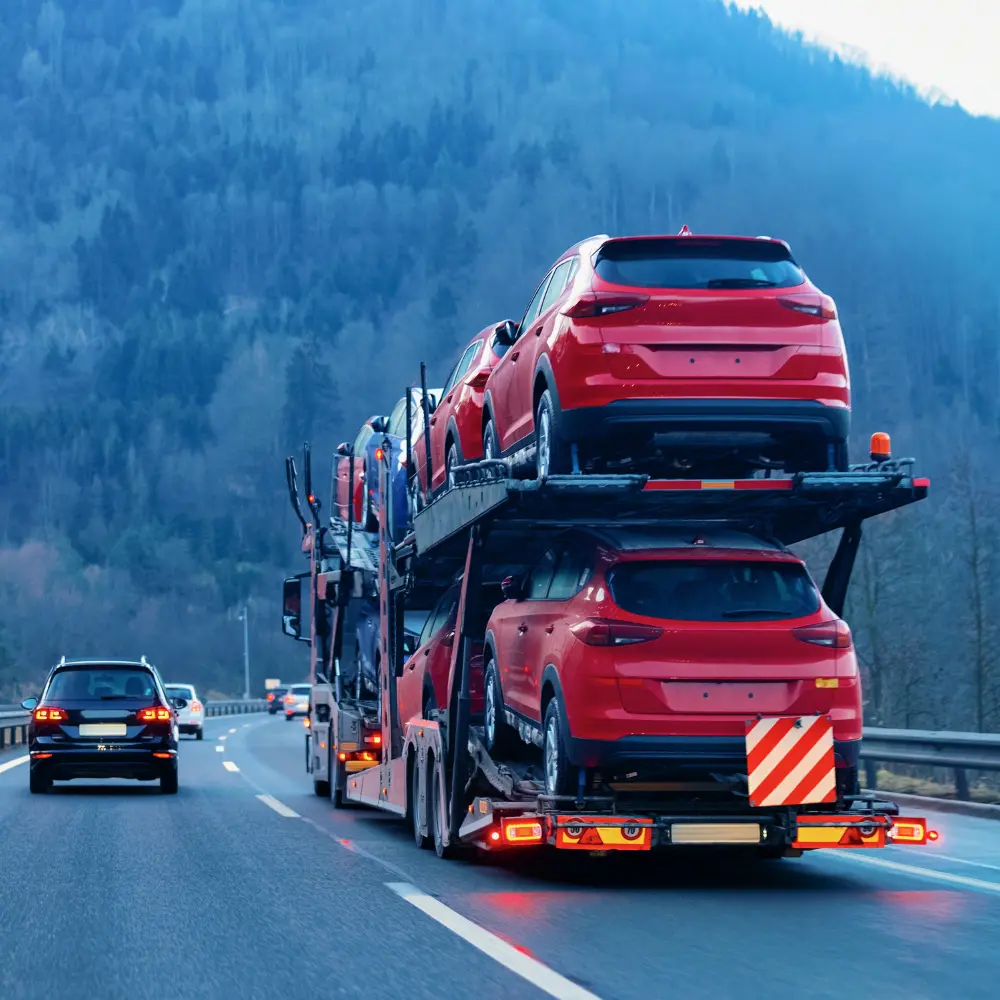
Definition of Enclosed auto transport
Enclosed auto transport means your vehicle is shipped inside a fully covered trailer. These trailers have walls and a roof, protecting your car from outside elements like rain, snow, dust, and road debris. This method is often used for luxury, exotic, antique, or specialty cars that need extra protection during transit.
Benefits of open vehicle transport
- Maximum protection – Your vehicle stays clean, dry, and fully shielded during shipping.
- Specialized care – Enclosed carriers often use soft straps, lift gates, and extra padding.
- Peace of mind – Ideal for cars with custom paint jobs, low ground clearance, or high sentimental value.
Things to consider
- Higher cost – Expect to pay more for the added protection.
- Limited availability – Fewer enclosed carriers mean scheduling may take slightly longer.

Open vs Enclosed Auto Transport: A Quick Comparison
| Feature | Open Auto Transport | Enclosed Auto Transport |
|---|---|---|
|
Protection from elements |
Minimal – exposed to weather and road dirt |
Full protection – enclosed on all sides |
|
Cost |
More affordable |
More expensive (30%-50% higher) |
|
Vehicle types |
Standard cars, SUVs, pickup trucks |
Luxury, exotic, classic, rare, or modified cars |
|
Availability |
High – more carriers on the road |
Lower – limited enclosed carrier availability |
|
Scheduling |
Faster pickup and delivery times |
May take slightly longer to schedule |
|
Special handling features |
Basic loading and unloading |
Lift gates, soft tie-downs, padded interiors |
Which Option Is Right for You?
Choosing between open and enclosed auto transport depends on your priorities:
- Choose open transport if you want the most economical option and are shipping a regular, everyday-use vehicle.
- Choose enclosed transport if your car is valuable, rare, or requires extra care.
If you’re still unsure, consider the value of your vehicle, how important it is to keep it clean and protected during shipping, and your budget.
Common Vehicles That Use Each Method
Typically Shipped via Open Transport
- Daily drivers
- SUVs and pickup trucks
- Lease returns
- Fleet vehicles
- Used cars from dealerships
Typically Shipped via Enclosed Transport
- Classic cars
- High-end luxury vehicles (Lamborghini, Ferrari, etc.)
- Custom-built cars
- Collector’s vehicles
- Show cars with delicate parts or custom finishes
Conclusion
Both open and enclosed auto transport are trusted methods to move your vehicle from point A to point B. The best choice comes down to how much protection your vehicle needs, your timeline, and your budget.
At 2 J’s Auto Transport, we offer both services nationwide. Whether you’re moving a regular sedan or a rare collector’s car, our team will guide you through the process and help you make the best choice for your vehicle.
Have questions? Call us today at 877-325-7288 or request a free quote online to get started.
Auto Transport Industry Related FAQs
Quotes & Pricing
Booking & Scheduling
Vehicle Eligibility & Types
Transport Methods & Options
Insurance & Protection
Tracking & Communication
Contracts & Documents
Vehicle Preparation
Roles & Terminology
Delivery & Timing
Company Info & Trust
Vehicle Shipping Regulations in Different U.S. States and Cities
Useful Vehicle Shipping Tips and Guidelines

John Furbush
I am the Owner and President of Operations at 2 J’s Auto Transport, with over 12 years of hands-on experience in the vehicle shipping industry. Since starting the company in 2012, I helped thousands of customers move everything from everyday cars to motorcycles, heavy equipment, and oversized loads. I know the ins and outs of auto transport industry, including all the laws and regulations set by USDOT, FMCSA, and local authorities. I built my business around honesty, reliability, and making the process simple for people, especially those shipping a vehicle for the first time.